
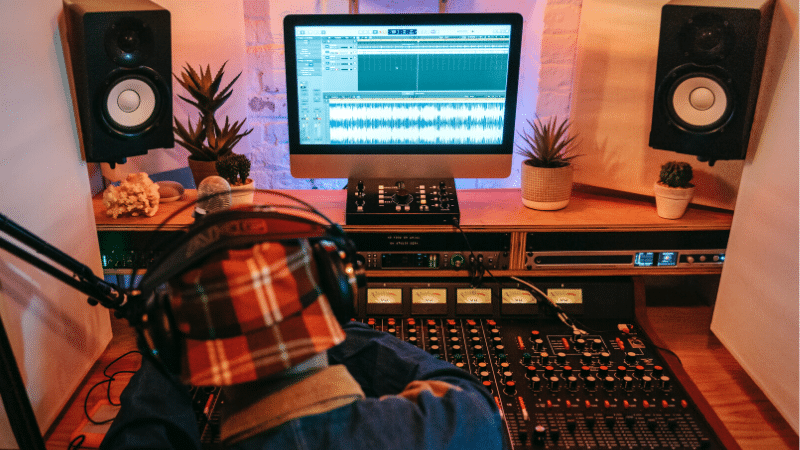
If you’re a singer, instrumentalist, songwriter, or independent artist, learning how to produce your own music can be a game changer for your creative journey. You do not need a perfect studio or years of technical experience to start. You need a simple setup, a clear learning path, and the confidence to make imperfect music while you build your skills.
In this guide, Xylo Aria, founder of the online music production learning platform Music Production for Women (MPW), breaks down how to get into music production as a beginner, what gear you actually need, how to choose your first software, and how to stay consistent long enough to finish your first track.
How to Get Into Music Production as a Beginner
I started as a singer songwriter who was always reliant on other producers to make music. I remember feeling frustrated because my ideas often got lost in translation. Learning to produce opened up a whole new world of possibilities and allowed me to bring my musical vision to life exactly as I heard it.
If you are just starting your production journey, the goal is not to build the most expensive studio or make a perfect song right away. The goal is to learn how your tools work, build confidence, and start turning your ideas into something you can actually hear.
Key Takeaways
- You can start music production with a laptop, headphones, and a DAW. Do not buy a full studio setup before you know what you need.
- Your first DAW should fit how you create. Try beginner-friendly options before committing to one workflow.
- Consistency matters more than long practice sessions. Two short sessions per week can build real momentum.
- Your first songs do not need to sound professional. They are practice tracks that help you learn arrangement, recording, editing, and mixing.
- Once you finish a song, start learning how releases work. Production is only one part of building a sustainable artist career.
What Is Music Production?
Music production is the process of turning a musical idea into a finished recording. Depending on the song, that can include writing, recording, arranging, programming drums, editing vocals, choosing sounds, mixing, and preparing the track for release.
For beginners, music production usually starts with learning a digital audio workstation, also called a DAW. This is the software where you record audio, create beats, arrange song sections, add effects, and export your finished track.
You do not have to master every part of production at once. A better starting point is to learn one simple workflow: open your DAW, create a basic beat or chord progression, record one idea, arrange it into sections, and export a rough demo.
Start With the Gear You Already Have
It can be very tempting to go to a music store, ask for recommendations, and spend a lot of money on new gear. Unfortunately, I made this mistake starting out. Ten years later, I sold a few things that I never ended up using.
There are very few things you actually need to start producing music. In most cases, you can begin with:
- A laptop or desktop computer
- A pair of headphones
- A DAW or music production software
- A simple place to work without too much background noise
Start with the laptop you already have if it is powerful enough to run music software. You can get a decent pair of headphones without spending a fortune, and many DAWs offer free versions, free trials, or low-cost entry plans.
Beginner Music Production Setup
Once you are ready to build from there, you can add an audio interface and microphone to record vocals, instruments, or external gear. Later, you might add studio monitors so you can listen on speakers instead of only using headphones.
Here is a simple order that works for most beginners:
- Start with your computer, headphones, and DAW. Learn the basics before buying extra gear.
- Add a USB microphone or audio interface and microphone. This helps if you record vocals, guitar, or live instruments.
- Add a MIDI keyboard or pad controller if it fits your workflow. This can help with chords, melodies, drums, and sound design.
- Add studio monitors later. They are helpful, but they do not need to be your first purchase.
If you need more recommendations on building a home studio without spending too much on things you do not need yet, check out MPW’s Getting Started in Music Production Checklist.
Choose a DAW That Fits How You Create
Your DAW is where most of your production work will happen, so choosing one matters. That said, do not spend months trying to find the perfect one. The best DAW for beginners is the one you can open consistently and actually use.
Here are a few beginner-friendly places to start:
- GarageBand: A great starting point for Mac users who want a simple, approachable way to record and arrange music. You can explore GarageBand for Mac directly through Apple.
- BandLab: A free online Studio that lets you record, mix, and collaborate from your browser or mobile device. Explore the free online Studio.
- Ableton Live: Popular with electronic producers, beatmakers, and live performers. Ableton also offers a free trial, which makes it easier to test before you buy. Try Ableton Live.
- FL Studio: A popular option for beatmaking, hip-hop, pop, and electronic music. You can explore the FL Studio free trial.
Do not worry if another producer uses a different DAW. Most professional tools can record, edit, arrange, and mix music. What matters most is choosing one and learning it well enough to finish ideas.
Learn the Fundamentals Before Buying More Gear
When you are new to music production, it is easy to think the next plugin, microphone, keyboard, or sample pack will solve everything. Sometimes a new tool helps, but most beginner problems come from not fully understanding the basics yet.
Focus on these fundamentals first:
- Recording: Learn how to capture clean vocals or instruments without distortion.
- Arrangement: Learn how to build sections like verses, choruses, intros, bridges, and outros.
- MIDI: Learn how to create drums, basslines, chords, and melodies inside your DAW.
- Audio editing: Learn how to cut, move, fade, and clean up recordings.
- Basic mixing: Learn volume, panning, EQ, compression, reverb, and delay.
- Exporting: Learn how to bounce your song as an audio file you can share.
These skills will help you more than buying advanced equipment too early.
Find a Teacher or Structured Course
This is something I wish I realized earlier. Many people decide to learn entirely on their own from YouTube, and while this can be an accessible place to start, it can easily take much longer. When you do not know what you do not know, it is difficult to know what to search for.
Getting lessons, joining a course, or following a structured beginner program can drastically cut down the learning curve. Even a short course on the fundamentals can help you understand the language of production, avoid common mistakes, and build confidence faster.
📚 Pro Tip: MPW runs a free Intro to Music Production class that is a great place to start if you are taking your first steps.
Allow Yourself to Make Bad Music
I often see students who are new to production feel discouraged because they listen to polished pop music and feel their creations do not sound as good. This is like comparing a toddler taking their first steps to Usain Bolt in a 100 meter sprint. They are completely different stages of development.
As you learn, set your main goal to enjoy the process rather than to create a perfect track right away. Understand that what you make at the beginning may not sound polished, and that is part of the process. Every rough demo teaches you something.
Try creating small projects with specific goals, such as:
- Make an eight-bar drum loop
- Record one vocal idea
- Build a verse and chorus
- Recreate the structure of a song you love
- Practice mixing only the vocals and beat
These small wins help you improve without putting too much pressure on every idea.
Build a Simple Weekly Practice Routine
Setting aside one hour twice a week is usually better than setting aside a whole day once a month. Producing music involves muscle memory, listening skills, and familiarity with your tools. Consistency helps you build all three over time.
Here is a simple beginner routine:
- Session 1: Watch one lesson or tutorial, then apply it immediately in your DAW.
- Session 2: Create a small idea without judging it.
- Session 3: Edit, arrange, or improve something you already started.
If you only have 30 minutes, that still counts. Open the session, make one decision, and keep moving. Small, consistent actions build confidence faster than waiting for a perfect block of time.
Find a Community That Keeps You Going
Learning to produce on your own can be lonely, especially if you are working from a bedroom setup. When the process gets difficult, doing it all on your own can make it easier to give up.
Finding a community that understands what you are going through can be a powerful resource. You can ask questions, share progress, get feedback, and see other beginners working through the same challenges.
There are producer communities around the world. For example, Ableton User Groups can be a helpful place to find local or online music production communities. You can also look for beginner producer groups, songwriting communities, online workshops, Discord servers, or learning spaces connected to your DAW.
Finish One Track Before You Upgrade Everything
One of the best things you can do as a beginner is finish a full track, even if it is not perfect. Finishing teaches you things that short loops cannot. You learn how to move from an idea to an arrangement, how to make decisions, and how to solve problems instead of starting over every time something gets hard.
Your first finished track does not need to be released. It can be a private demo. The important thing is learning the full process from start to finish.
Before upgrading your gear, ask yourself:
- Have I finished at least one complete song or demo?
- Do I understand the basic tools in my DAW?
- Do I know what problem this new gear will solve?
- Can I improve my current sound with better technique instead?
If you can answer those questions clearly, you will make smarter purchases and avoid wasting money on tools you do not need yet.
What Comes After You Produce Your First Song?
Once you have created something you feel proud of, the next step is learning how to prepare it for release. That includes finalizing the mix, getting the track mastered, preparing artwork, organizing metadata, choosing a release date, and building a plan to promote it.
If you are ready to move from producing your music to sharing it with the world, check out Symphonic’s guide to release your first finished track. You can also explore how music distribution works and use this release checklist for independent musicians to stay organized.
When the time comes to distribute your music, collect royalties, monitor analytics, and grow your reach, Symphonic can help you take the next step while keeping your music and your career at the center.
Frequently Asked Questions
How do I get into music production as a beginner?
Start with a computer, headphones, and a beginner-friendly DAW. Learn the basics of recording, MIDI, arrangement, editing, and mixing. Keep your first projects small, practice consistently, and aim to finish simple demos before buying more gear.
What equipment do I need to start producing music?
Most beginners only need a laptop or desktop computer, headphones, and music production software. If you want to record vocals or instruments, add a microphone and audio interface when you are ready.
What is the best DAW for beginners?
The best DAW is the one that fits how you create. GarageBand can be a great starting point for Mac users, BandLab is useful for free online creation and collaboration, Ableton Live is popular for electronic music and performance, and FL Studio is widely used for beatmaking and production.
Can I learn music production on my own?
Yes, but a structured course, teacher, or community can help you learn faster. YouTube can be useful, but beginners often save time by following a clear learning path instead of jumping between unrelated tutorials.
How long does it take to get good at music production?
It depends on your goals and how consistently you practice. You can learn the basics in a few weeks, but developing your sound takes time. Focus on steady progress, finished projects, and small improvements from one track to the next.
Final Thoughts
Starting your production journey is often the hardest part, so take the first step. That might mean downloading a free trial, opening a free online Studio, signing up for a beginner class, or spending one hour learning how to create your first beat.
I completely understand the frustration of not knowing how things work and wanting to give up. But as you chip away at it one session at a time, you will see your skills develop. When you get to the point where you have created something you love and can play it loud in your car on a summer drive, trust me, it will all be worth it.
👀 Want to learn even more?
Claim your free music production mini mentoring session with Xylo here. You can also join the MPW mailing list for additional resources right here.
Good luck!