
Imagine your song playing over a pivotal scene in a TV show. Or soundtracking an ad that runs nationally for six months. Or being the track in a video game that millions of people play.
That’s what sync licensing can do. And beyond the exposure, it pays. Sync fees can range from a few hundred dollars for smaller placements to tens of thousands for major TV and film, with performance royalties continuing to pay out every time the content airs.
But getting there takes more than great music. You need your catalog properly prepared, your rights clearly documented, your metadata airtight, and a real understanding of how the industry works. That’s exactly what this guide covers.
Download the Free Ultimate Guide to Sync Licensing
Symphonic’s Ultimate Guide to Sync Licensing is a free, comprehensive resource covering everything independent artists need to know to start landing placements, from the basics of how sync licensing works to how to pitch your music, what to expect when working with a sync rep, and how to build the relationships that make a long-term sync career possible.
What Is Sync Licensing?
Sync licensing is the process of licensing music to be used alongside visual media. Any time a music supervisor places a song in a film, TV show, commercial, video game, or trailer, that’s sync. The fee paid to use the music is called a sync fee, and it’s negotiated between the music supervisor and the rights holders of both the master recording and the underlying composition.
There’s also micro-sync, which covers smaller-scale placements like YouTube videos, Instagram Reels, TikToks, podcasts, online ads, and livestreams. Micro-sync deals pay less individually, but they add up quickly and are a consistent income stream for artists whose music gets picked up regularly by digital creators. For a full primer on how sync licensing works and why it matters, this breakdown of what sync licensing is and how it works is a solid starting point.
What’s Inside the Sync Licensing Guide
How to Prepare Your Music for Sync
This is where most artists fall short before they even start pitching. The guide walks through every step of getting your catalog sync-ready, including creating mastered instrumental and clean versions of your tracks, documenting ownership splits with a signed split sheet, registering with a PRO so your performance royalties are properly collected, clearing any samples in your music, and making sure your metadata is complete and accurate. Disputed splits or unclear ownership can kill a sync placement even after a supervisor wants to use your track, so the guide covers exactly how to avoid that. For a deeper look at each of these steps, this full guide to preparing your music for sync licensing goes into more detail on each requirement.
Sync Libraries vs. Direct Placements
The guide breaks down the difference between submitting your music to a sync library, where it sits in a searchable database for supervisors to find on their own terms, and pursuing direct placements through pitching or working with a sync rep. Libraries offer volume and passive exposure, but typically lower fees and less control. Direct placements give you better terms and more visibility, but require relationships and a proactive strategy. Understanding which approach fits your catalog and goals is one of the most important decisions you’ll make in sync.
How to Pitch Your Music with Bodega Sync
As a Symphonic Distribution client, you can apply for representation through Bodega Sync, Symphonic’s in-house sync licensing division. Bodega pitches directly to music supervisors and advertising agencies, handles negotiations, and manages all the paperwork so you get paid correctly. Because they work on commission, there are no upfront costs, and they only make money when you do. The guide covers exactly what Bodega is looking for in applicants, including the one-stop ownership requirement, minimum catalog size, and why authentic artists with original vocals tend to perform best in the sync market. Before applying, what to know before applying to Bodega Sync is worth reading to make sure your music and rights situation are in the right shape.
What to Expect When Working with a Sync Rep
Once you sign with a sync rep and deliver your music, things can go quiet for a while. The guide explains why that’s normal and what’s actually happening on the other side: your rep is learning your catalog, identifying the right fits, and actively pitching to supervisors for projects that match your sound. Sync reps work on commission, so they have a direct financial incentive to get your music placed. The guide also covers how to stay organized during this period and what a healthy sync rep relationship looks like long-term.
Building Relationships in the Sync World
Sync is a relationship-driven industry. Music supervisors place music from artists they trust, and that trust is built over time through consistent contact, quality work, and showing up where the industry gathers. The guide covers the best conferences for sync networking, including the Guild of Music Supervisors Conference, SXSW, and Music Biz Conference, as well as how to build familiarity with supervisors through social media and industry engagement even before you ever pitch them a track. For indie labels looking to get their full roster positioned for sync, this sync licensing guide for indie labels covers catalog preparation and strategy at scale.
Who This Guide Is For
This guide is for any independent artist or label who wants to understand sync licensing, get their music properly prepared for placement consideration, and learn how to pitch strategically whether through a sync rep, a library, or direct outreach. It’s also relevant if you’ve been pitching already but haven’t landed placements and want to understand what might be missing.
Download the Free Sync Licensing Guide
Click the image below to download The Ultimate Guide to Sync Licensing from Symphonic and take the first step toward getting your music in front of the right people.
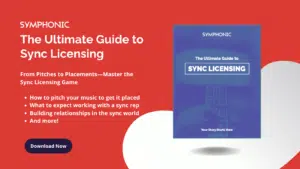
👉 Download the Free Guide Here
Frequently Asked Questions
What is sync licensing in music?
Sync licensing is the process of licensing a piece of music to be used alongside visual media, such as a TV show, film, commercial, video game, or trailer. The rights holder receives a sync fee for the placement, and if the content airs on broadcast channels, performance royalties are generated on top of that fee.
What is micro-sync licensing?
Micro-sync covers smaller-scale digital placements, such as YouTube videos, TikToks, Instagram Reels, podcasts, and online ads. The fees are smaller than traditional TV or film placements, but they can be a consistent income stream, especially if your music gets picked up regularly by content creators across multiple platforms.
What is Bodega Sync?
Bodega Sync is Symphonic’s in-house sync licensing division. It’s a full-service sync rep agency that pitches music directly to music supervisors and ad agencies on behalf of artists. Bodega works on a commission basis with no upfront costs, meaning they only earn when you do. Symphonic Distribution clients can apply for representation directly through the platform.
Do I need to own my masters to get a sync placement?
Not always, but it helps significantly. Bodega Sync prefers “one-stop” artists, meaning you control both the master recording and the publishing rights to your music. When both sides are owned by the same person or clearly documented, it makes the licensing process much faster and more attractive to music supervisors who are working on tight timelines.
Can my music be rejected from sync if it has samples?
Yes. If your track contains uncleared copyrighted samples, it cannot be licensed for sync without permission from the sample’s original rights holders. Bodega Sync and most sync agencies will not accept music with uncleared samples, licensed beats from marketplaces like BeatStars, or AI-generated content. If sync is a goal, it’s worth creating sample-free versions of your tracks or clearing samples before pitching.

Other Stories You May Like
Symphonic Partners with SET
How to Know When You’re Ready to Print Physical Music